Blogging & News Websites Built for Organic Traffic
SEO-first news and blogging platforms on Laravel — fast on mobile, easy to manage, and structured for Google News and rich result eligibility.
A blog or news website lives and dies by organic search. If Google can't crawl it efficiently, load it fast on a 3G connection, or understand its content structure, the content you publish will not reach the audience it deserves. I build blogging and news websites on Laravel that are designed for search performance from the architecture upwards — not optimised as an afterthought once the site is live.
Technical SEO as a Foundation
Every article page gets a canonical URL, a structured meta title and description, Open Graph tags for social sharing, and Article schema markup for rich results. The sitemap is generated dynamically and submitted to Google Search Console. Internal linking is systematic rather than manual — related articles surface automatically based on categories and tags. Pagination follows the canonical-URL pattern that avoids duplicate content penalties.
For news publications, I implement the technical signals associated with Google News: article publisher metadata, publication timestamps in schema, and structured data markup. These increase the chance of appearing in Google News and Discover — though inclusion is at Google's discretion.
Performance on Mobile and Slow Connections
Most Kenyan content consumers arrive on mobile and on connections that vary between 4G and edge. Images are served in WebP format, lazy-loaded, and sized correctly for the viewport. The above-the-fold content renders quickly even before JavaScript executes. Core Web Vitals — Largest Contentful Paint, Cumulative Layout Shift, Interaction to Next Paint — are treated as engineering requirements, not vanity metrics.
Content Management
The admin dashboard is designed for editors, not developers. Writing an article, assigning categories and tags, uploading a featured image, and scheduling publication should take minutes, not a developer consultation. The rich text editor handles formatting, embedded images, blockquotes, and code snippets without producing cluttered HTML. Draft and scheduled post states mean editors can prepare content ahead of time.
Categories, Tags, and Content Organisation
A logical taxonomy helps readers find related content and helps Google understand the site's topic authority. I design the category and tag structure for your specific publication before building, rather than using generic defaults that create organisational problems later.
Author Profiles and E-E-A-T
Google's quality guidance rewards content from identifiable, credible authors. I build author profile pages with biography, social links, and a list of articles by that author. Author schema is included on each article page so Google can associate the content with a named person, which matters particularly for YMYL topics like health, finance, and legal content.
Monetisation
Ad slot management for Google AdSense or direct-sold display ads, email newsletter subscription capture and integration with Mailchimp or a custom email list, sponsored content labelling that satisfies Google's editorial guidelines, and paywall logic for publications with a subscription model. These are configured at build time rather than retrofitted later.
How I Deliver This
Content strategy alignment
We define your taxonomy, author structure, and monetisation approach before the architecture is designed.
Technical SEO design
URL structure, canonical strategy, sitemap design, and schema types selected before the first line of code.
Platform build
Article management, categories, authors, and public reader experience built against the agreed design.
Performance optimisation
Core Web Vitals measured and optimised. Images WebP-converted. Above-fold render time validated on a 3G simulation.
Search Console setup
Google Search Console, Google Analytics, and sitemap submission configured before launch.
Editor training
Editorial team trained on publishing workflow, scheduling, and SEO best practices for their platform.
Frequently Asked Questions
What I Can Build
- Article and news publishing with rich text editor
- Categories, tags, and author profiles
- Article and FAQPage schema markup
- Dynamic XML sitemap and robots.txt
- WebP images, lazy loading, Core Web Vitals optimisation
- Draft and scheduled post publishing
- Email newsletter subscription capture
- Display ad slot management
- Search and filtering for readers
- Multi-author editorial workflow
Tech Stack
Ready to start?
Tell me about your project and I'll outline a realistic scope and approach.
Get a QuoteRelated Work
 Completed
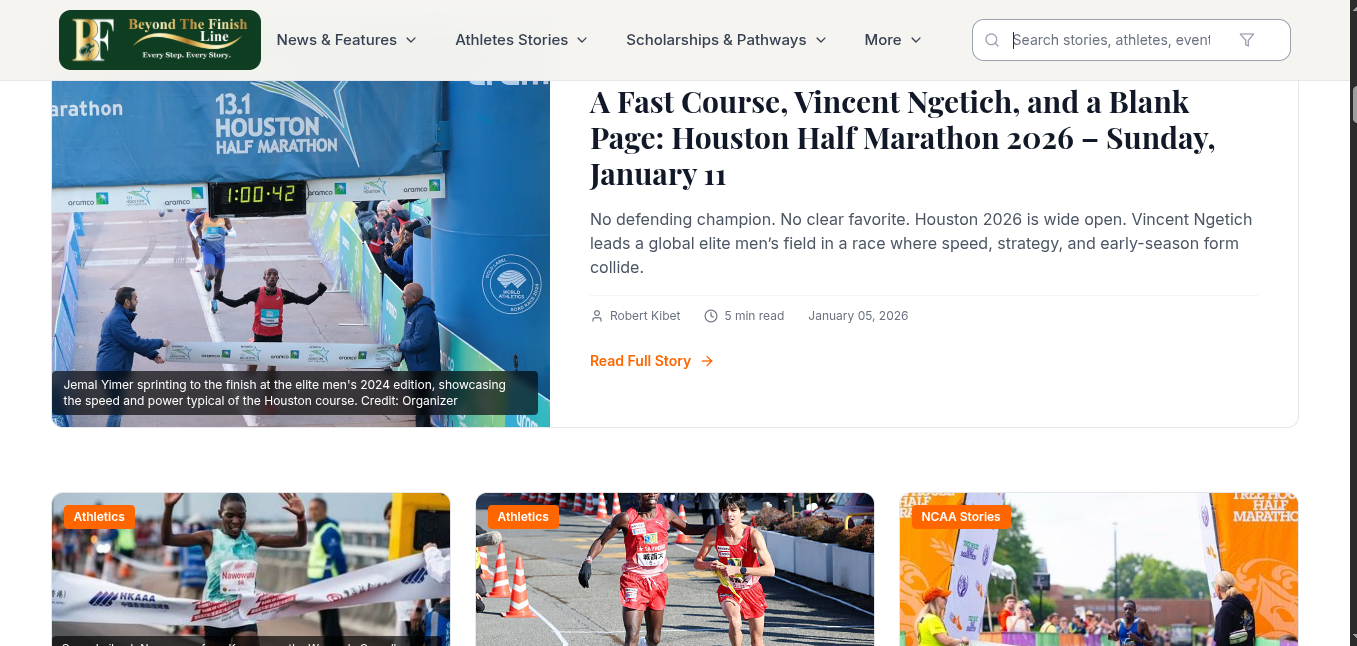
Beyond The Finish Line
Professional website for sports coaching and training services with booking system and content management.
Completed: Jan 2025